|
Like most science fiction fans, most of my life has been a wait for two discoveries which will fundamentally change humankind's role in the world. One is the discovery of alien life, which may not occur for millennia, if ever. The second is the development of artificial intelligence (AI), which might put me out of a job. The fear of an AI which surpasses our own intelligence and imposes a "judgement day" on humanity permeates our culture and media. It is also a salient enough threat that Stephen Hawking, Elon Musk and dozens of AI experts penned an open letter one year ago this week through the Future of Life Institute, outlining steps for steering the development of machine learning away from a devastating evolutionary course. Public administration research -- in particular, the study of organizational decision-making -- should be playing a major role. Today, public organizations --both hierarchical and networked structures -- distribute public goods and services, with humans sitting at most of the decision nodes. These cops, budget directors, contract managers and case workers function in a rule-structured environment of human interactions. Yet they're still not that great at long-term sustainability, or working information-disadvantaged and marginalized citizens into authentic decision-making positions within government. Public organizational goals such as efficiency are imbued with normative values. The humans at the decision-nodes may be expected most of the time to rank efficiency or effectiveness over secondary objectives such as social equity. This doesn't mean bureaucrats don't care about the disadvantaged; in fact, they are generally ethical. But they may also be sloppy in their rank ordering and inconsistent. With widespread distrust in government, AI may be eagerly deployed to reduce perceived bureaucratic incompetence in the future. Human decision-making nodes are likely to become scarce as machine learning advances. If we cannot engage disinterested or disadvantaged citizens in policymaking and implementation today, what will the chore look like when algorithms displace the administrators? As Herbert Simon is famous for noting, humans have biases, sympathies and cognitive limits which force them to take mental shortcuts and make boundedly rational decisions. AI will be able to easily surpass its maker in this regard. Public organizations may be rendered far more efficient by removing corruptible and incompetent humans from public service delivery. Automated fleets may snow-plow our streets. Automated systems will record, ticket and debit the bank accounts of humans who still take manual control of their cars and speed. Public assistance programs will be fully automated, including eligibility determinations. Local government officials competing for economic development may turn to machines to improve strategic decision-making in the face of uncertainty. But how will a sentient budget system decide which schools to close in a contracting school district? How will an autonomous law enforcement drone apply ethical standards in a protest? In a response to Musk's call for open-access to machine learning technologies, evolutionary biologist Suzanne Sadedin wrote last month that the competitive nature of organizational systems meant such a move would make it more likely that AI will "wipe out" itself and humanity. Her argument is straight-forward: humans have been pretty good at competing for scarce resources, but machines will be better. This is the basic logic of Garrett Hardin's "tragedy of the commons." Agents have incentive to exploit a resource by taking more than their share when it is limited. Only humans have learned over thousands of years what happens at the small scale when you over-harvest a natural resource. Public and private organizations compete today globally and have never experienced a similarly scaled "tragedy of the commons," Sadedin writes. They simply have no evolutionary history to draw from, and their first tragedy may be the final one. There is a middle ground. Elinor Ostrom's work on Social-Ecological Systems has contributed much to our ability to "govern the commons." Inter-generational ethics, social equity and citizen participation are holy grails in public administration. Their importance should become more mission-critical as humans are removed from the decision-making processes. Our field -- sometimes frowned upon for its "explicitly normative" focus on ethics, equity and practical policy problems -- has produced a tremendous depth of knowledge to offer the birthing of AI. As terrifying as AI-empowered oil companies and militaries might sound, why is it not possible to teach our machines like we would teach our children -- to cooperate, to trust and reciprocate? Remember "WarGames?" Last year, researchers developed a learning program which teaches itself to play different Atari games. Other programs are demonstrating the building-blocks of creative thinking -- inductive, deductive and temporal reasoning. They can read books and answer questions about them. "Do Andoids Dream of Electric Sheep?" the sci-fi novelist Philip K. Dick once asked us. MIT and Microsoft researchers last year moved us a step closer to answering with a graphic network which could "dream" meaningful imagery. On many fronts, 2015 showed us AI is developing mentally much like a child. What we teach these children is still very much up to us.
0 Comments
Academics on the conference circuit sometimes justifiably get a bad reputation for the perception that travel is less work than play.
Despite a severe political fight in Illinois over public spending, my department found a way this month to send myself and two colleagues to Thailand for talks to establish or expand joint-degree programs with Thai and Chinese universities and to attend the 6th International Conference on Local Government hosted by Khon Kaen University. Local government in Thailand takes on a different meaning than in the U.S. context. While the cities are administered by municipal clerks, the central government – led by the military -- appoints them and calls the shots in local development, service delivery and finance decisions. The same week we met with political science department administrators at Thammasat University to discuss the parameters for a joint-Master’s in Public Administration program with Northern Illinois University, hundreds of students and activists marched to Bangkok’s Democracy Monument to mark the nine-year anniversary of the country’s 2006 military coup. Thailand has had a succession of military juntas since then, and protests are technically outlawed. In the Bangkok Post, government officials threatened to hold the organizers of the protest “accountable.” The protests were meant to embarrass the country’s current military-backed prime minister, Gen. Prayuth Chan-ocha, who is slated to address the United Nations General Assembly in New York about Thailand's plans for poverty alleviation and sustainability, as well as when elections could be held (maybe 2017). Thailand is a tourism mecca, but it’s also an urban development hub where research on urban sustainability could find an audience. Everyone knows about Bangkok, a 14-million-population hub of investment, transportation and health-care companies from the Asian economic boom. But the country’s provinces are also in an anxious mood to boost development – creating Special Economic Zones (SEZ) where in some cases, residents are being displaced to make way for massive development projects. At the conference, I presented some research on Florida’s growth-management history which shared some commonalities with the Thai experience. Florida centralized its growth-planning in the 1980s in order to achieve more consistent and less-sprawling, environmentally damaging development patterns (although the policy never perfectly synced with the institutional design). Like many well-intentioned governmental efforts, Florida never adequately funded its growth-management system. My dissertation work (admittedly unpublished so far) has consistently found evidence that local government managers in Florida generally attempted to adhere to their comprehensive plans and resist sprawling, leap-frog types of development patterns. This negative managerial effect is conditional, of course, on the structure of the legislative institution in the community. Council members representing more concentrated areas in counties had a positive effect on more intensive land uses, offseting the effects of managers to some extent. And the mangerial effect differs between counties -- the locus of sprawl -- and cities. In a fit of political hubris – made possible by the broad disaffection with Florida’s sprawling results – Gov. Rick Scott and lawmakers decentralized growth-planning in 2011, handing control back to the local policymakers and developers who weren’t trusted to make those decisions in the 1980s. Where the state goes in terms of future growth is an open question. But my Thai experience reinforces the mandate scholars have to make our work relevant, not only to practitioners in the United States, but in developing countries where lessons from experiments in urban planning can offer insights. Thai professors I spoke with generally distrust elected politicians as a result of the widespread bribery when the country was under democratic control. At the same time, there was a general sense that the country needed more local control of its growth decisions in order to better protect the rights of marginalized populations. U.S. federalism has allowed us to experiment with a wide array of variants in local government structure and policies, and those experiences need more comparative work. Managing urban land use and development poses challenging governance issues to state and local governments not just in the United States but around the globe. Cities account for more than half of the world’s population (UN 2012) and will be home to 66% by 2050. At the same time, 70% of all greenhouse gas emissions contributing to climate change come from urban areas (IPCC 2014). Current global land-use trends suggest urbanization will accelerate globally over the next two decades -- in fact, we're on pace to develop more land between 2010-2030 than in all of recorded human history. Applying our findings – stretching them to see if they hold up in an international context – should be the primary goal of urban scholars in the coming years and decades. This is a precise moment in time when it makes the most sense to expand social science research investment. Hopefully, I can get back to Thailand and developing urban centers elsewhere to do that. In recent years, urban researchers have been understandably doing lots of work on sustainability – this conceptualization of the economic development, environmental protection and social equity activities of local governments as single, unidimensional latent construct. While the literature to date has offered a lot of insights, my co-author William Swann and I argue in a new Journal of Urban Affairs article that researchers need to now move beyond treating all “green” policy tools as these equally weighted commitments to sustainable governance. Specifically, we explore whether the degree of such commitment reflects different motivations and test for distinct political economies underlying decisions to commit to energy efficiency and greenhouse gas reduction policy tools. We find evidence that the determinants for the two types of policies are distinct, and subsequent research should focus on disentangling these distinct motivations for sustainable action by governments. It's been nearly five decades since Robert Dahl called local governments a "laboratory" for democracy, but only seven years since urban research was re-christened a "black hole" of political science from which "[n]o ideas escape the event horizon ... " (Sapotichne, Jones, & Wolfe, 2007).
Despite the many valid criticisms (or perhaps in response to some), public policy has continued recently to explore the problems of urban growth and decline in a multi-disciplinary fashion, focusing multiple theoretical lenses on questions of governance and division of authority as well as the practical applications for areas of policy specialization. I wrote a paper for the Policy Studies Journal 2015 Yearbook edition which reviews recent articles on income, housing, and racial/ethnic stratification, and the common link of mobility-based prescriptions. It also reviews the role sustainability, equity and cultural norms play in scholarship. The field is moving in a direction that integrates classical rational choice and sociological explanations for policies addressing sustainability and equity, the role of cultural identity in urban renewal efforts, and long-standing problems of citizen participation in government decision-making. CHICAGO -- It sounds like the kind of nerd fight that might make for a marginally successful SNL sketch: How do we get the young folks interested in federalism again? But for local government scholars, the multi-year discourse over how to stem declining interest in the American Society for Public Administration's local and regional governance section is a touchy subject.
Last week at ASPA's national conference at the Hyatt Regency Chicago, the debate came to a head. A group of scholars led by Chair Richard Feiock of Florida State University pushed through an amendment to the bylaws changing the definition of the Section on Intergovernmental Administration and Management (SIAM) to re-define the scope of the research its members undertake. The change was resisted by some who argued the new mission statement didn't adequately take into account the research on federalism and rural regions, and made minor omissions like failing to mention collaboration between the public and private sectors. After some debate, the section voted 16-14 for the new mission statement, with several grumbling that this was no way to increase membership. A more controversial measure to change SIAM's name to the Section on Governance was postponed for a year after Chair-elect Eric Zeemering made a motion to appoint a new committee to study the implementation of the new mission statement (and ostensibly consider new options for names). It averted what might have been a far nastier fissure in the group. (One fellow student told me the fight was the most interesting thing he saw at the five-day conference). The parliamentary moves in one esoteric wing of an academic discipline are less significant than the overriding concern among ASPA higher-ups that junior scholars are finding other outlets for their networking and research sharing. ASPA, like SIAM, is witnessing a pronounced decline in membership. Last fall, Dr. Feiock (my major professor at FSU) tapped Drs. Benoy Jacob at the University of Colorado-Denver, Cali Curley at Indiana University-Purdue University-Indianapolis (IUPUI), Jennifer Connolly at the University of Miami, and myself to report back on what SIAM needed to do to better brand itself with junior scholars. During our first conference call, most of us confessed we'd never heard of SIAM, and were unsure how membership might be useful for our careers. Herein lies part of the problem: Urban scholarship is highly fragmented between a number of disciplines, including sociology, political science, economics, urban planning, among many others (just look up the disciplines of a randomly selected volume of the Journal of Urban Affairs). Urban scholars have their own associations (Urban Affairs Association and APPAM, not to mention political science sections on policy and urban politics), and convincing them that ASPA membership has something unique to offer will be a tough task. These researchers often find more familiarity among scholars from other disciplines who share interests in specific urban policies like charter schools, public housing, gender and racial/ethnic equity and other forms of social stratification. The scholars SIAM wants to recruit are already being serviced by these specialized membership organizations. If we couldn't think of a reason to join, why would anyone else? How would anyone even know public administration's SIAM (an acronym with negative connotations for Thai residents) from the Society for Industrial and Applied Mathematics? Public administration sections are, frankly, far behind many of their peer disciplines in tapping into social media. Go to the Midwest Political Science Association conference in April, for instance, and watch the kinds of Twitter exchanges that break out. By comparison last week, the ASPA hashtag #ASPA2015 looked like it was being populated by about six highly caffeinated but extremely lonely people. SIAM (or whatever name it assumes next year) now has a blog here, hosted by the University of Illinois at Chicago's Jered Carr and Aleea Perry. Yours truly has been tapped with attempting to develop a social media presence for the section. But before you can sell new urban scholars on SIAM, the organization needs to develop a pitch that distinguishes this venue from the myriad options they have now. The problem is compounded by the mandatory short-term self-interests of untenured scholars who need to derive some benefit from membership in a section beyond networking. Junior scholars need to be laser focused on the tangible payoffs that will pad their tenure applications. A section like SIAM needs to provide an outlet where young (I use this term interchangably with "junior," even though I hardly qualify as "young" anymore) researchers can sharpen their papers, cultivating potential future research collaborators and get better panel placement. In good, old-fashioned economic terms, they need to be able to maximize their utility -- increase their chances of publication, or tap into new networks of collaborators with the potential for high short-term research payoffs. This might sound a bit selfish or myopic, but these are the realities facing the kinds of hungry folks any organization that hopes to survive needs populating its business meetings and paying dues. Luckily for SIAM, the section has a significant base of excellent scholars who have much to offer to junior analysts. The question is whether junior scholars can be successfully matched in ways that allow them to derive intellectual inspiration, productivity motivation, and take-home utility. The next year will be an interesting experience. SESYNC graduate research pursuit: Water management transitions in Miami, Los Angeles and Las Vegas1/9/2015 Thanks to the directive for more problem-oriented NSF projects and the need for better inter-disciplinary research on resource management, organizations like the University of Maryland's National Socio-Environmental Synthesis Center (SESYNC) are working to bring social and physical scientists together for team research into environmental problems. I was fortunate enough in the Fall of 2014 to get approved for an 18-month Graduate Pursuit research grant along with a team of five other political science, engineering, environmental science and economics students. The project is examining the water-stress and institutional influences on "water management transitions" in three U.S. cities -- Los Angeles, Miami, and Las Vegas -- over a 20-year period. This is allowing us to bring modeling for hydrology and the Institutional Analysis and Development (IAD) framework together in a novel application of Elinor Ostrom's "Institutional Grammar" tool. The tool involves coding the rules, norms and shared strategies for water management which overlap and are nested in varied governance arrangements. The project has already been eye-opening and challenging, and promises to lead to interesting insights regarding how these three water-challenged metropolitan areas have responded to increasing water stresses. The mission of SESYNC is to develop existing data into actionable policy recommendations, so one of our primary goals is to produce a policy briefing we hope to share at conferences and other water-management forums. We have already come up with some novel research strategies which promise to make for interesting journal articles by the time the project wraps up. I would highly recommend taking advantage of SESYNC's resources, if anyone has the opportunity. The organization is top-notch. Here's a more in-depth description of our project: https://www.sesync.org/project/graduate-student-pursuit-rfp/water-miami-vegas-la |

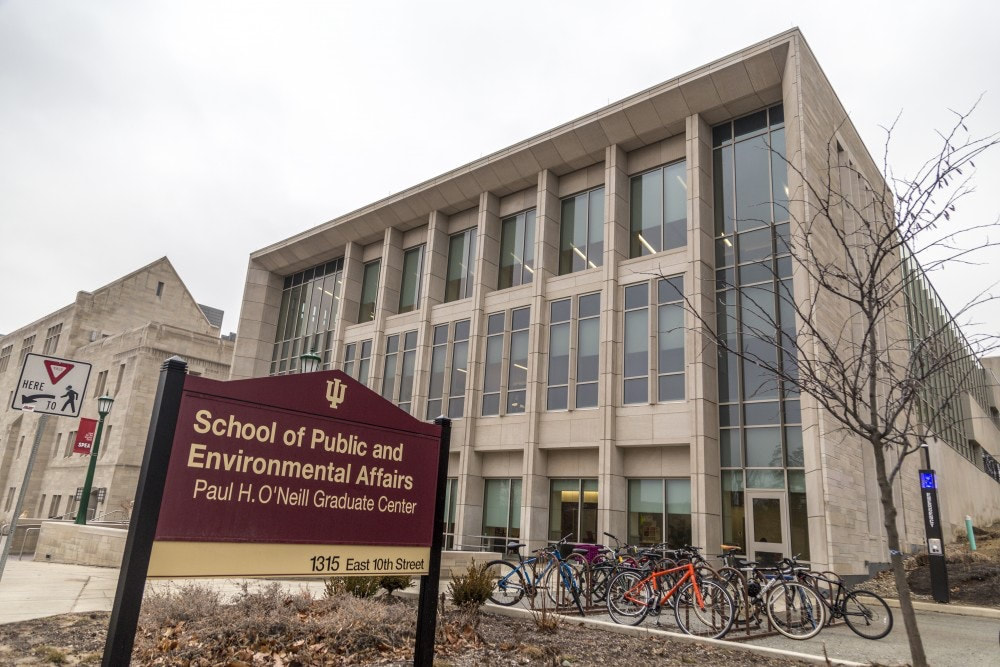
AuthorI work as an Associate Professor at the O'Neill School of Public and Environmental Affairs at Indiana University Bloomington. There, I co-direct the MGMT Lab. Archives
October 2025
Categories |